

WHY WE CONVENE
Gathering people is easy.
Changing what happens when they leave is the hard part.
CII convenes with one purpose: to shift how capital moves, how decisions get made, and who gets to be at the table when they do. These aren’t networking events. They’re working sessions where practitioners, policymakers, and community leaders stress-test ideas, surface what’s blocking progress, and build the trust that makes systems change possible.
Every convening in this series is a building block. Each one created the conditions for the next.
THE ARC
We started close in and deliberately expanded outward as the work matured.
November 2024 set the foundation — a single urgent question: what does affordability actually require as a capital design challenge? The principles that emerged became our internal compass.
March 2025 built on that. Same CII-produced intimacy, sharper questions. We moved from naming the problem to pressure-testing solutions.
By the Salon series co-produced with Impact PHL, supported by Vanguard, the work had earned the room. Co-production became possible because the framework was already solid. CII shifted from hosting conversations to anchoring a coalition.
Affordability In Focus
Before we could talk about capital, we had to talk about how we see the communities capital is meant to serve.
We opened with Trabian Shorters, the mind behind asset framing — whose work is reshaping how philanthropy, corporations, and government understand communities historically defined by deficit rather than power. That lens was intentional. Capital follows narrative, and we wanted to build this series on a different story.
The session centered on affordability as a design challenge, not a policy checkbox. The moment that cracked the room open came from the board chair of Women’s Community Revitalization Project: “Affordable for who?” That question didn’t close the conversation. It opened the next one.
NOVEMBER 14, 2024
AFFORDABILITY IN FOCUS

Still CII-produced and intentionally intimate, this session pushed into strategy: what does it take to build capital structures that actually move resources to leaders like the ones in our portfolio? We brought in the CEO of the Groundbreak Coalition who weaves together financial resources with other key forms of capital in a multi-pronged strategy designed to close generational wealth gaps now and create a more equitable system long term, in MSP and beyond; and Common Future, whose community-centered finance model has been reshaping how practitioners think about money and belonging. The panel was largely funder-facing. The tension was productive. You could feel the field shifting its posture.
That conversation is what made the Salons possible.
MARCH 7, 2025
Building the Capital Case
If November named the question, March began building the answer.
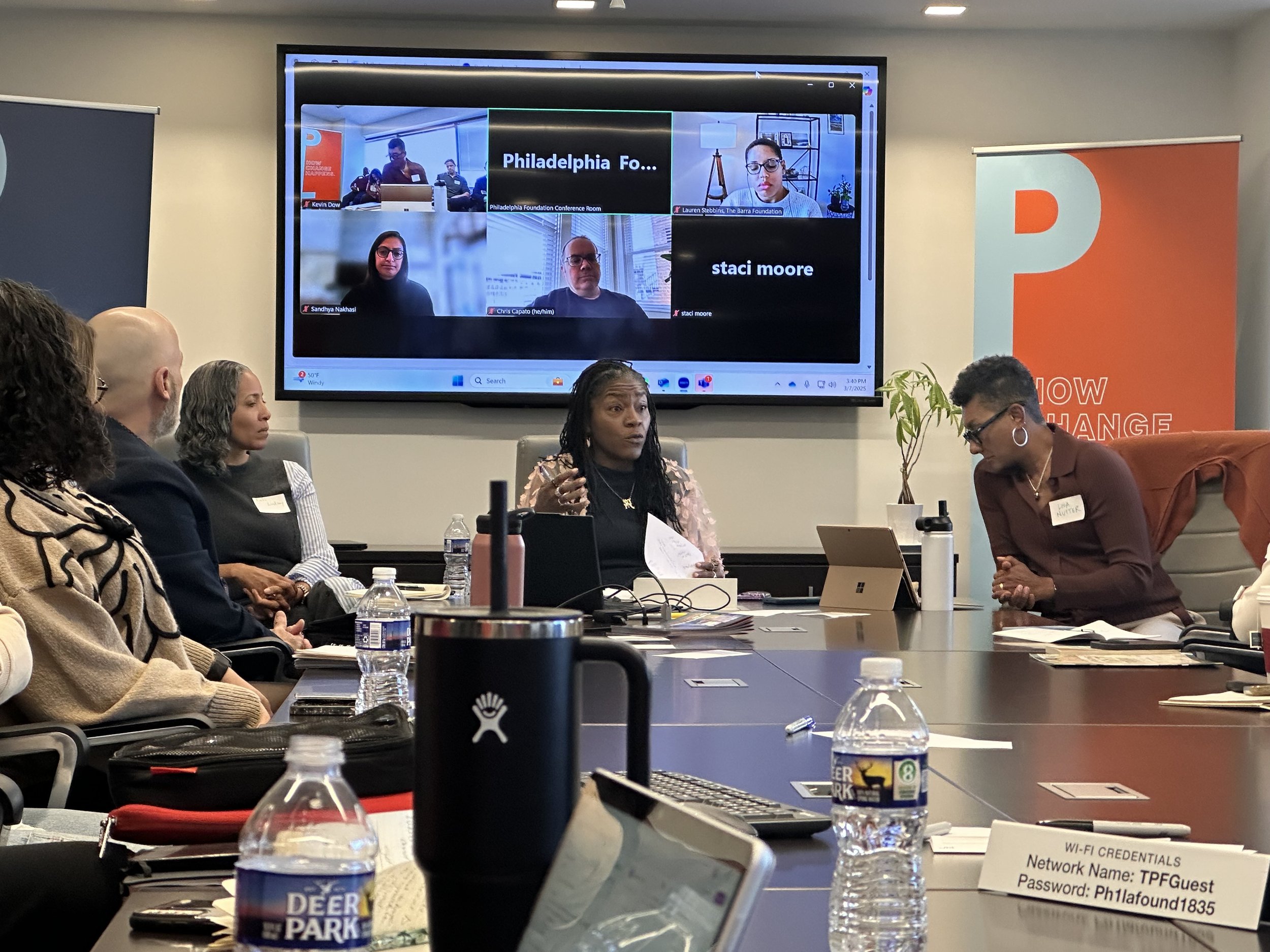
By spring, the work had earned a larger table.
In partnership with Impact PHL and with support from a sponsor, CII convened two dinner salons at High Street Restaurantñ small tables, family-style dinner, real questions. The format was designed for candor, and it delivered.
April 23, held the evening after the Federal Reserve Bank of Philadelphia’s Economic Mobility Summit, surfaced what the Summit couldn’t hold: honest conversation about why national capital isn’t reaching local opportunity. Speakers included Damien Dwin and Anne Bovaird Nevins, moderated by Kafi Lindsay. The room’s consensus: flexible capital is possible. Institutional will is what’s in the way. The next conversation started here.
THE SALON SERIES — APRIL & JUNE 2025
Co-Production and Coalition
June 17 went deeper. Themed Capital Beyond Access, speakers from the Black Economic Alliance Foundation, Chicago TREND, and Impact PHL examined what wealth creation — not just access — looks like in Black and brown communities. The evening closed with an invitation to act, not just stay in dialogue.
Together, the convening and salon series marked CII’s turn from convener to coalition anchor.